Unlocking Focus: The Role of Selective Attention Icons in Modern Design
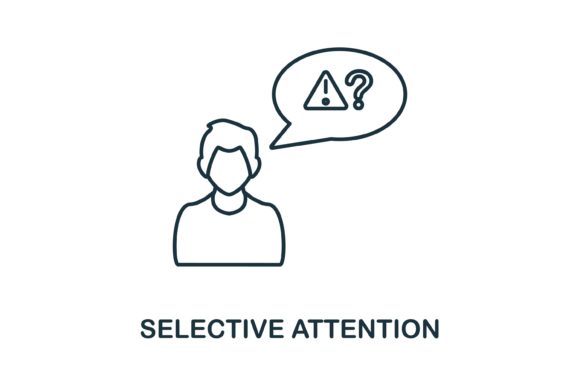
In today's fast-paced, visually driven world, capturing and maintaining the attention of your audience is more challenging than ever. One tool that has gained significant traction in the design and marketing community is the Selective Attention Icon. This icon, often used in infographics, web design, and other visual communications, serves as a powerful symbol to guide and direct the viewer's focus.
Understanding the Selective Attention Icon
The Selective Attention Icon is a versatile and intuitive design element that helps users quickly identify and focus on the most important information. It typically features a simple, clean design, often with a line or outline style, making it easy to integrate into various design contexts. The icon is part of a broader collection of cognitive skills icons, which are designed to enhance user engagement and comprehension.
Why the Selective Attention Icon Matters
In a landscape saturated with information, the ability to direct attention effectively can make or break a design. The Selective Attention Icon addresses this need by providing a clear, visual cue that helps users navigate and prioritize content. This is particularly valuable in digital environments where users are bombarded with multiple stimuli.
Integration into Broader Trends
The rise of the Selective Attention Icon aligns with several key trends in the industry:
- Minimalist Design: As designers move towards cleaner, more minimalistic aesthetics, the Selective Attention Icon fits seamlessly, offering a subtle yet effective way to highlight important elements without overwhelming the viewer.
- User Experience (UX) Optimization: In the realm of UX, the Selective Attention Icon plays a crucial role in guiding users through interfaces, improving navigation, and enhancing overall usability.
- Data Visualization: With the increasing importance of data-driven storytelling, the Selective Attention Icon is a valuable asset in creating compelling and easily digestible infographics and data presentations.
Practical Applications and Examples
The Selective Attention Icon can be applied in a variety of creative and business contexts. Here are some practical examples:
- Website Design: Use the Selective Attention Icon to draw attention to key calls-to-action, such as "Sign Up" buttons or important links. This can significantly improve conversion rates by making these elements more noticeable.
- Educational Materials: Incorporate the Selective Attention Icon into e-learning platforms and educational documents to highlight critical information, helping students and learners stay focused and engaged.
- Marketing Collateral: In brochures, flyers, and other marketing materials, the Selective Attention Icon can be used to emphasize key benefits and features, making the message more impactful and memorable.
Changing Needs and Preferences
The growing preference for simplicity and clarity in design reflects a broader shift in consumer expectations. Users now demand experiences that are not only visually appealing but also functional and efficient. The Selective Attention Icon meets this need by providing a straightforward, no-nonsense solution to the challenge of information overload.
Moreover, as remote work and digital communication become more prevalent, the need for effective visual communication tools has never been greater. The Selective Attention Icon helps bridge the gap between complex information and user understanding, making it an indispensable tool for professionals, creators, and marketers alike.
Access and Ease of Use
The Selective Attention Icon is available in multiple file formats, including EPS, JPG, AI, and SVG. This versatility ensures that the icon can be easily integrated into a wide range of design projects, from print to digital. Additionally, the vector format allows for easy editing and scaling, ensuring that the icon remains crisp and clear at any size.
Conclusion
The Selective Attention Icon is a powerful and versatile tool that enhances the effectiveness of visual communication. By directing the viewer's focus and simplifying complex information, it supports better user experiences and more impactful designs. As the demands of modern communication continue to evolve, the Selective Attention Icon stands out as a key element in the designer's toolkit, helping to create more engaging and effective visual content.